
In Québec, storytelling is not simply a cultural expression; it is a living system of knowledge, identity, and connection to place. Across 11 Indigenous Nations throughout the province, from the Cree of Eeyou Istchee to the Inuit of Nunavik and the Wendat of Wendake, stories are not confined to books or performances. They are carried in voices, landscapes, and relationships, shaping how communities understand the past and navigate the future.
For the adventure travel industry, this presents both an opportunity and a responsibility: to engage with storytelling not as entertainment, but as a pathway into Indigenous worldviews, which must be approached with respect, reciprocity, and Indigenous leadership.
With Québec set to host the Adventure Travel World Summit (ATWS) 2026, these conversations are especially timely. The destination itself offers a powerful opportunity to experience Indigenous storytelling firsthand and to reflect on how the industry can engage more responsibly.
Join global leaders in Québec for ATWS to explore these themes in depth, and learn more about Québec's indigenous tourism here.
Storytelling as Learning and Living
In many Indigenous cultures in Québec, storytelling is foundational to how knowledge is transmitted. Oral traditions have long served as the primary method of teaching values, history, environmental understanding, and social norms across generations.
Unlike Western narratives that often separate education from entertainment, Indigenous storytelling is rooted in a deep connection to the land, where stories carry traditional knowledge, survival skills, and cultural values. Through these narratives, listeners learn to read the environment, understand natural cycles, and sustain relationships with the land, all while being engaged on emotional and spiritual levels.
Among Inuit communities in northern Québec, storytelling has historically been woven into everyday life, with topics exploring community and sharing, relationships with animals, and how to live in balance with the environment. These narratives are not static; they evolve with each telling, adapting to new contexts while preserving core teachings.
Crucially, storytelling is relational. It depends on the presence of a storyteller—often an Elder—and an audience, creating a shared moment where knowledge is exchanged and community bonds are reinforced. For travel professionals, understanding this distinction is critical. Storytelling is not a product, it is a process.
Rooted in Land and Environment
One of the defining features of Indigenous experiences in Québec is its deep connection to the land. Stories are anchored in specific rivers, forests, coastlines, and seasons. For Nations based in northern and remote regions, this connection is especially pronounced. Narratives carry environmental knowledge, teaching how to read weather patterns, understand animal behavior, and live sustainably. The land is not just a setting but an active participant.
This perspective challenges conventional tourism narratives. For Indigenous communities, the landscape is not a backdrop for adventure, it is a living entity with which humans are in relationship. For travelers, engaging with these stories can fundamentally shift how destinations are experienced. A forest becomes more than a hiking trail; it becomes a repository of memory, meaning, and instruction.
At the 2026 Summit in Québec, participants will have the opportunity to engage directly with place-based storytelling and Indigenous-led experiences. Register now to be part of the conversation.
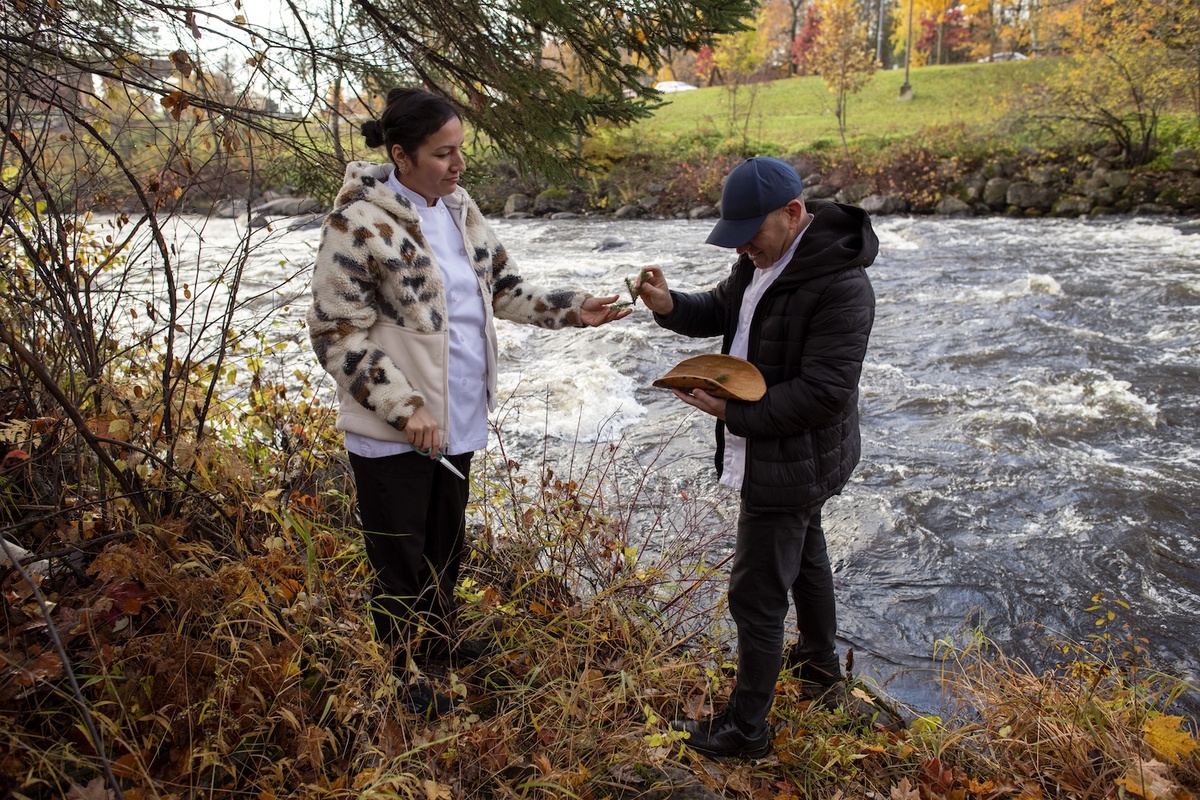
Discovering Indigenous Traditions along the Rivière Saint-Charles (River) / Région de Québec © GouvQc Gaëlle Leroyer
Diversity of Voices Across Québec
Québec’s Indigenous storytelling traditions are far from monolithic. The province is home to a diverse range of Nations—including Anishinaabe (Algonquin), Atikamekw, Eeyou (Cree), Innu, Inuit, Kanien'kehá:ka (Mohawk), Naskapi, W8banaki, Wendat, Wolastoqiyik—each with its own languages, histories, and narrative forms.
Across Indigenous communities, storytelling conveys cultural truths, guides individual behavior, and is often deeply connected to time spent on the land. These tales are shared organically in moments of gathering and reflection. In some places, traditions are expressed through immersive experiences, while in others they remain rooted in more traditional forms.
This diversity underscores a key point: there is no single “Indigenous story.” Authentic engagement requires recognizing and respecting distinct voices.
Resilience and Revitalization
Indigenous storytelling traditions in Québec have endured significant disruption due to colonial policies that attempted to sever the transmission of language and culture. Yet storytelling has proven remarkably resilient.
Today, many communities are actively revitalizing storytelling practices as part of broader cultural resurgence efforts. Elders continue to pass down knowledge, while younger generations adapt storytelling to new mediums like film, digital platforms, and tourism experiences.
Indigenous-led tourism initiatives are creating new spaces for storytelling that are controlled and shaped by Indigenous voices. These experiences are not just about preservation; they are about reclaiming narrative sovereignty. For the adventure travel industry, this resurgence presents an opportunity to support Indigenous-led initiatives in meaningful ways.
Storytelling and the Visitor Experience
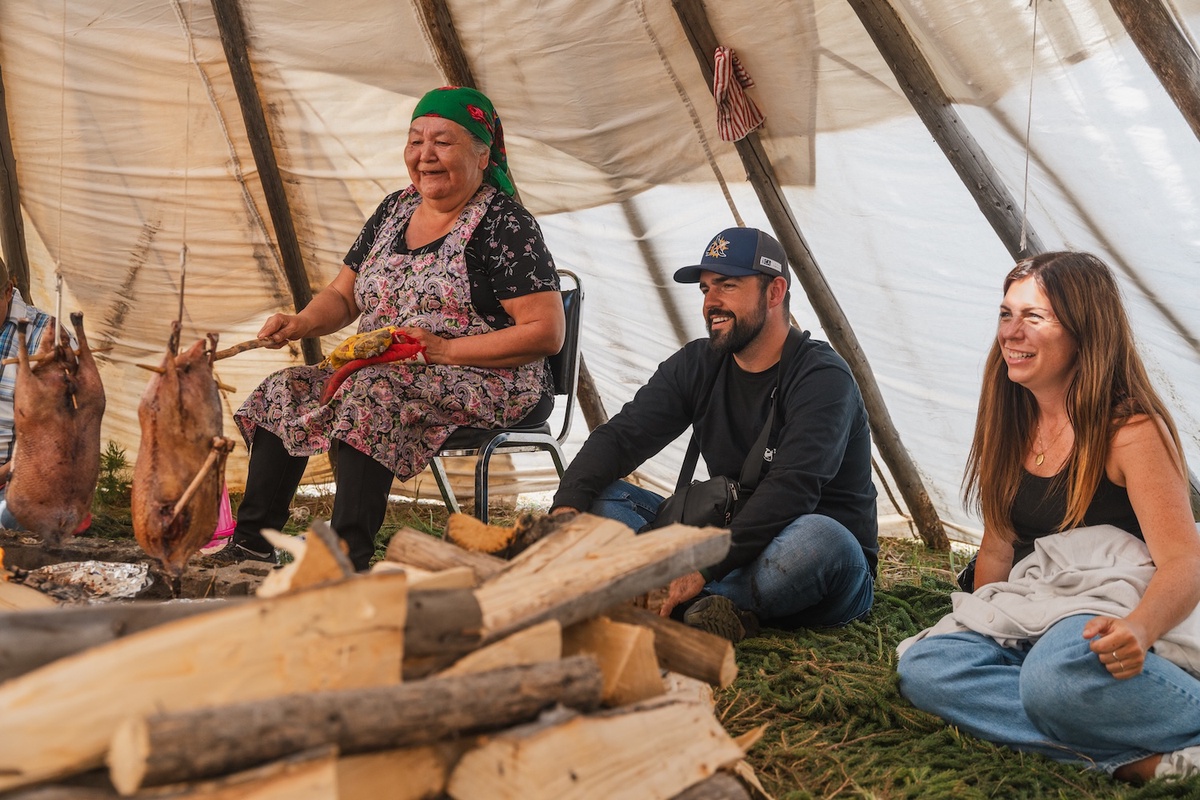
For adventure travelers, Indigenous storytelling offers a deeper way to connect with place while also inviting a shift in expectations. Across the province, community members who are ready to share their stories are already doing so through a diverse and thoughtfully structured range of tourism experiences. In this context, tourism becomes a powerful tool for connection and an important bridge for learning about history, culture, and relationships to the land.
At the same time, storytelling is not simply available on demand. It is often shared in specific contexts, at certain times of year, and with appropriate protocols, and some stories may be sacred or not intended for outsiders. The most meaningful experiences are those led by Indigenous communities themselves, where storytelling is woven into broader cultural and land-based activities, whether listening to knowledge shared in natural settings, participating in seasonal practices, or exploring landscapes through Indigenous perspectives.
Implications for the Adventure Travel Industry
As demand for Indigenous tourism grows, storytelling is increasingly central to the visitor experience. But this trend requires careful navigation:
- Center Indigenous leadership: Authentic storytelling must be led by Indigenous communities.
- Move beyond performance: Go beyond viewing storytelling as only staged entertainment. While performances are a meaningful and authentic way of sharing culture, storytelling should also be experienced in broader, context-rich settings that reflect its deep connections to land, knowledge, and community.
- Respect protocols and boundaries: Work closely with communities to understand what can and cannot be shared.
- Commit to ongoing learning: Engaging with Indigenous storytelling requires humility and openness.
- Support communities holistically: Engage beyond a single experience by supporting local accommodations, restaurants, artisans, and other community-led initiatives.
These are not just best practices, they are essential to building a more responsible and inclusive adventure travel industry.
A Living Tradition
Indigenous storytelling in Québec is not a relic of the past but a dynamic, evolving practice that continues to shape communities and landscapes. For the adventure travel sector it offers a pathway to deeper connection, moving beyond surface-level engagement toward understanding, respect, and reciprocity. In a world increasingly disconnected from place, this may be the most powerful story of all.
These themes will be explored in depth at the Adventure Travel World Summit 2026 in Québec.
Secure your spot and join industry peers in shaping the future of travel.